
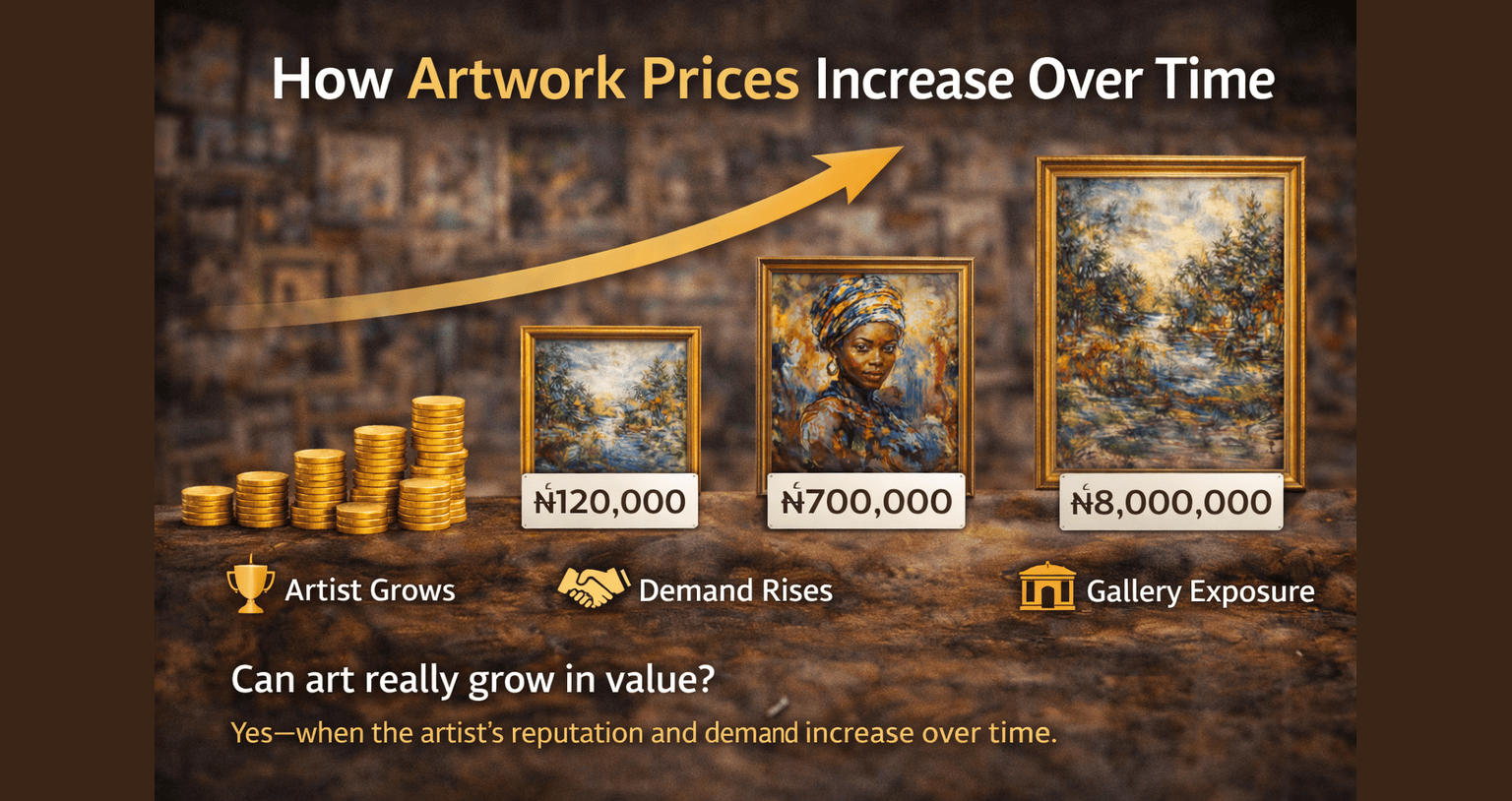
How Artwork Prices Increase Over Time
Have you ever seen a painting that sold for a modest amount years ago… and now it’s worth ten or even a hundred times more?
It happens more often than people think.
And no, it’s not magic. It’s a mix of reputation, demand, timing, and a bit of patience.
If you’re curious about how artwork actually grows in value, or you’re thinking about buying art yourself, this guide will walk you through it in plain language.
First, Let’s Clear Up a Myth
Not every piece of art becomes valuable.
That’s the truth most people don’t say out loud.
But many artworks do increase in price over time, especially when they come from artists who are growing, consistent, and gaining recognition. Understanding how that growth happens helps you make smarter decisions when buying.
1. The Artist’s Reputation Grows
This is the biggest factor.
When an artist is early in their career, prices are usually lower. Fewer exhibitions. Smaller audience. Limited exposure.
But as time passes, things can change:
- The artist participates in exhibitions
- Galleries begin to represent their work
- Collectors start paying attention
- Media or online platforms feature their art
Each of these moments adds credibility.
And credibility increases demand.
When demand rises but the number of available original works stays the same, prices naturally go up.
It’s simple economics, but in the art world, it plays out in a fascinating way.
2. Demand Increases While Supply Stays Limited
Think about it.
A musician can release thousands of copies of a song.
A clothing brand can produce thousands of shirts.
But an original painting?
There’s only one.
Even highly productive artists can only create a limited number of original pieces each year. As more collectors discover their work, competition increases.
And when several buyers want the same kind of work from the same artist, prices move upward.
3. Gallery Representation Adds Value
When an artist begins working with a reputable gallery, something important happens.
Their work becomes:
- Curated
- Professionally presented
- Marketed to collectors
Galleries also help maintain pricing consistency, which protects long-term value.
Collectors tend to feel more confident purchasing through a gallery because authenticity and quality are already verified. That confidence helps strengthen demand over time.
4. Exhibition History Builds Credibility
Collectors often ask:
“Has this artist exhibited before?”
Why does this matter?
Because exhibitions signal seriousness and recognition. An artist who consistently shows their work publicly is building a track record.
And track records matter in any market.
Even local exhibitions, group shows, or gallery features contribute to the perception of value. Over time, that perception becomes reality in the form of higher prices.
5. Media Exposure and Online Visibility
We live in a digital world.
Artists who build an audience online, through Instagram, digital galleries, or art platforms, often see their work appreciate faster.
Why?
Because visibility drives demand.
A single viral post or feature can introduce an artist to thousands of potential buyers overnight. And once collectors start paying attention, prices often follow.
6. Early Collectors Benefit the Most
Here’s something experienced collectors understand:
The best time to buy art is often before everyone else notices the artist.
When you purchase early:
- Prices are more accessible
- Availability is higher
- Growth potential is stronger
Many collectors look back years later and wish they had bought more from artists they discovered early.
It happens all the time.
7. Proven Sales Create Price Benchmarks
Once an artist sells work at a certain price, that price becomes a reference point.
Future works rarely sell for less unless there’s a major change in circumstances. More often, prices gradually increase as new pieces are released.
Think of it like property values in a neighborhood. Each sale influences the next one.
8. Quality and Consistency Matter
Not every artist’s prices increase at the same rate.
Collectors pay attention to:
- Consistency in style and technique
- Quality of materials
- Professional presentation
- Commitment to their craft
Artists who produce thoughtful, consistent work over many years tend to build stronger long-term value.
Art isn’t just about talent. It’s also about discipline.
9. The Role of Story and Meaning
This part is often overlooked.
People don’t just buy art for decoration. They buy stories, emotions, and perspectives.
When a piece resonates deeply, or reflects cultural, social, or personal themes—it often holds stronger long-term appeal.
And appeal keeps demand alive.
10. Time Is the Real Multiplier
Art appreciation usually isn’t instant.
It’s gradual.
Years pass. The artist evolves. More collectors discover the work. Prices climb step by step.
Patience is part of the process.
Collectors who understand this don’t expect overnight results. They buy because they love the work first, and enjoy the financial upside later.
So, Is Art a Good Investment?
It can be. But here’s the honest answer:
The best reason to buy art is that you genuinely like it.
Financial appreciation is a bonus, not the only goal. When you choose pieces you enjoy living with, you win either way.
And if the artist’s career grows? That’s an added reward.
How to Choose Art With Growth Potential
If you’re thinking long-term, look for:
- Emerging artists with a clear, consistent style
- Artists actively exhibiting their work
- Original pieces rather than mass reproductions
- Galleries that carefully curate their collections
Spaces like Omolayo Art Gallery focus on presenting original works from promising artists, which makes it easier for collectors to discover pieces with potential before prices climb significantly.
Artwork prices don’t rise randomly.
They increase because:
- Artists build reputations
- Collectors compete for limited works
- Galleries and exhibitions add credibility
- Time strengthens demand
And here’s the part many people don’t realize until later:
The piece that feels affordable today may not be available at the same price a few years from now.
That’s the quiet truth about collecting art.
So if you find a piece that speaks to you, don’t overthink it too long. Sometimes the smartest investment isn’t just financial, it’s trusting your instinct when something truly moves you.
