
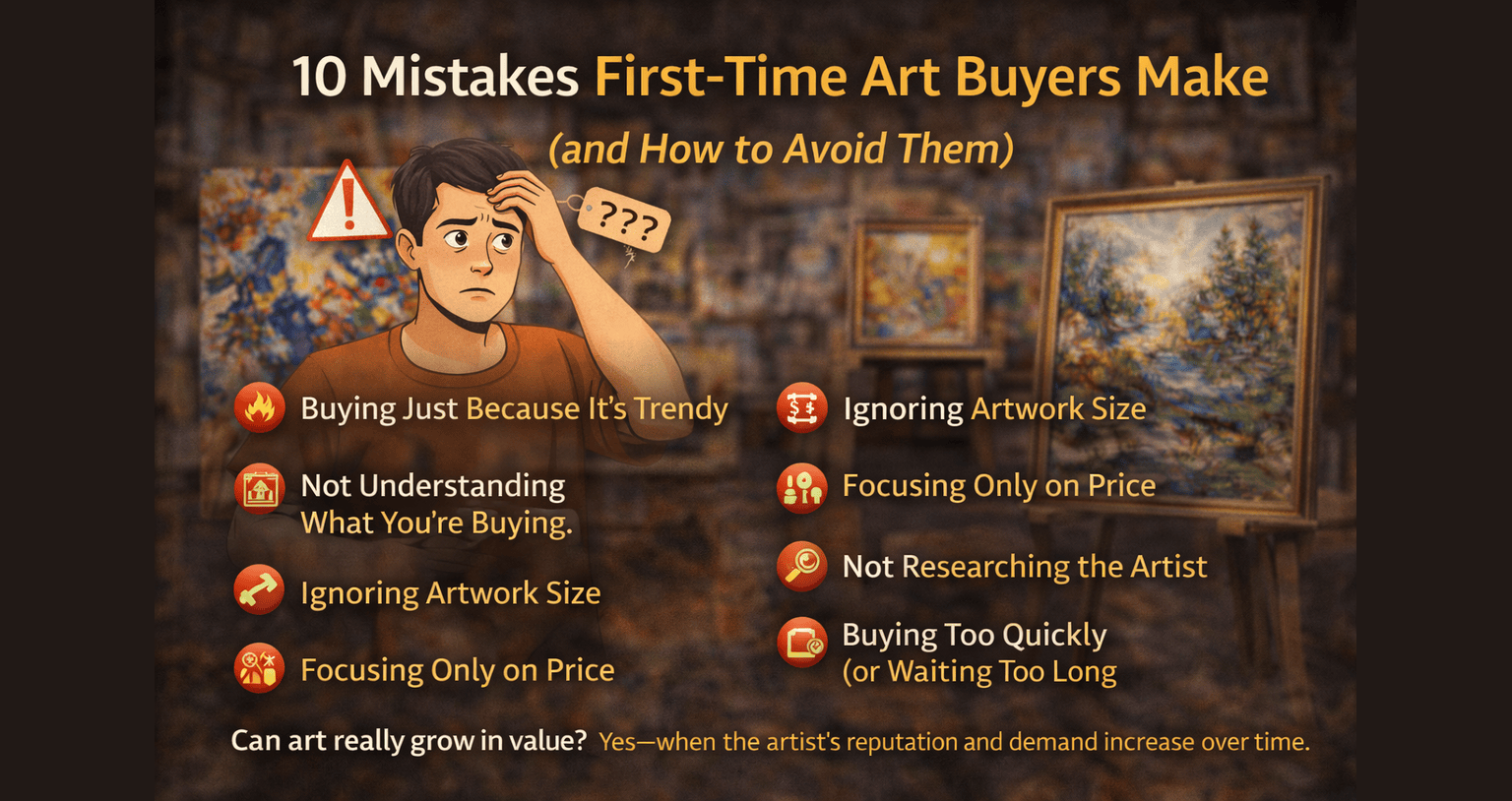
10 Mistakes First-Time Art Buyers Make (and How to Avoid Them)
Buying your first piece of art is exciting.
You start browsing. You see something that catches your eye. You imagine it on your wall. For a moment, you’re already picturing the compliments from friends and visitors.
But here’s the truth most people don’t talk about:
first-time buyers often make small mistakes that can lead to regret later.
The good news? They’re easy to avoid once you know what to look for.
Let’s walk through them.
1. Buying Art Only Because It’s Trendy
Trends are powerful. Minimalist abstracts, bold portraits, monochrome pieces—styles come and go.
But art is personal.
If you’re buying something just because it’s popular, there’s a chance you won’t connect with it long-term. And when the trend fades, your interest might fade with it.
Better approach:
Buy what you genuinely like. If a piece still excites you after a few days, that’s usually a good sign.
2. Not Understanding What You’re Buying
Many beginners don’t realize there’s a big difference between:
- Original artwork
- Limited edition prints
- Open edition reproductions
They look similar in photos, but they’re very different in terms of uniqueness and long-term value.
Better approach:
Always read the description carefully and ask questions if anything isn’t clear.
3. Ignoring the Size of the Artwork
This happens all the time.
A painting looks large on your phone screen… but arrives much smaller than expected. Or the opposite—it overwhelms the wall.
Better approach:
Measure your wall space before buying.
A simple tape measure can save a lot of disappointment.
4. Focusing Only on Price
It’s tempting to sort listings from lowest to highest price.
But cheaper isn’t always better, and expensive doesn’t always mean valuable either.
Price depends on many factors:
- Artist experience
- Medium and materials
- Size
- Reputation
- Demand
Better approach:
Look at value, not just cost.
5. Not Researching the Artist
You don’t need to write a thesis, but a little background helps.
Find out:
- How long they’ve been creating
- Whether they’ve exhibited their work
- Whether their style is consistent
Artists who are serious about their craft often build value over time.
6. Buying Too Quickly (or Waiting Too Long)
Funny enough, beginners often swing between two extremes.
Some rush and buy impulsively.
Others hesitate so long that the artwork sells.
Original art is unique. Once it’s gone, it’s gone.
Better approach:
Give yourself time to think, but don’t overthink forever.
7. Forgetting to Check Authenticity
This is important.
Original artworks should usually include:
- The artist’s signature
- Details about the medium
- Dimensions
- A certificate of authenticity when applicable
Better approach:
Buy from galleries or sellers who provide clear information upfront.
For example, curated spaces like Omolayo Art Gallery help reduce this risk by presenting verified original works with proper documentation.
8. Not Considering Where the Artwork Will Go
A piece can be beautiful—but not every artwork fits every space.
Lighting, wall color, and room mood all matter.
Better approach:
Picture the artwork in your actual environment. Ask yourself:
- Will this work with my furniture?
- Will the colors complement the room?
- Is the size balanced?
9. Thinking Art Is Only for Experts or the Wealthy
This belief stops many people before they even start.
You don’t need to be a millionaire or an art historian to buy art. Many emerging artists create incredible works at accessible prices.
Better approach:
Start small. One piece is enough to begin a collection.
10. Forgetting That Art Is Emotional
Some buyers treat art purely as decoration or investment.
But the best collections usually begin with emotion.
The pieces that matter most are the ones that make you pause… the ones you keep looking at… the ones that feel personal.
Better approach:
Choose artwork that connects with you first. Everything else comes after.
A Simple Rule That Makes Buying Art Easier
If you remember nothing else, remember this:
Buy art you love, from sources you trust, at a price you’re comfortable with.
That one principle prevents most beginner mistakes.
Every experienced collector was once a first-time buyer.
They made mistakes. They learned. They developed their eye over time.
That’s part of the journey.
So don’t let fear hold you back. Learn a little, trust your instincts, and enjoy the process. Buying art isn’t just about owning something beautiful, it’s about discovering what moves you.
And that’s a journey worth starting.
