
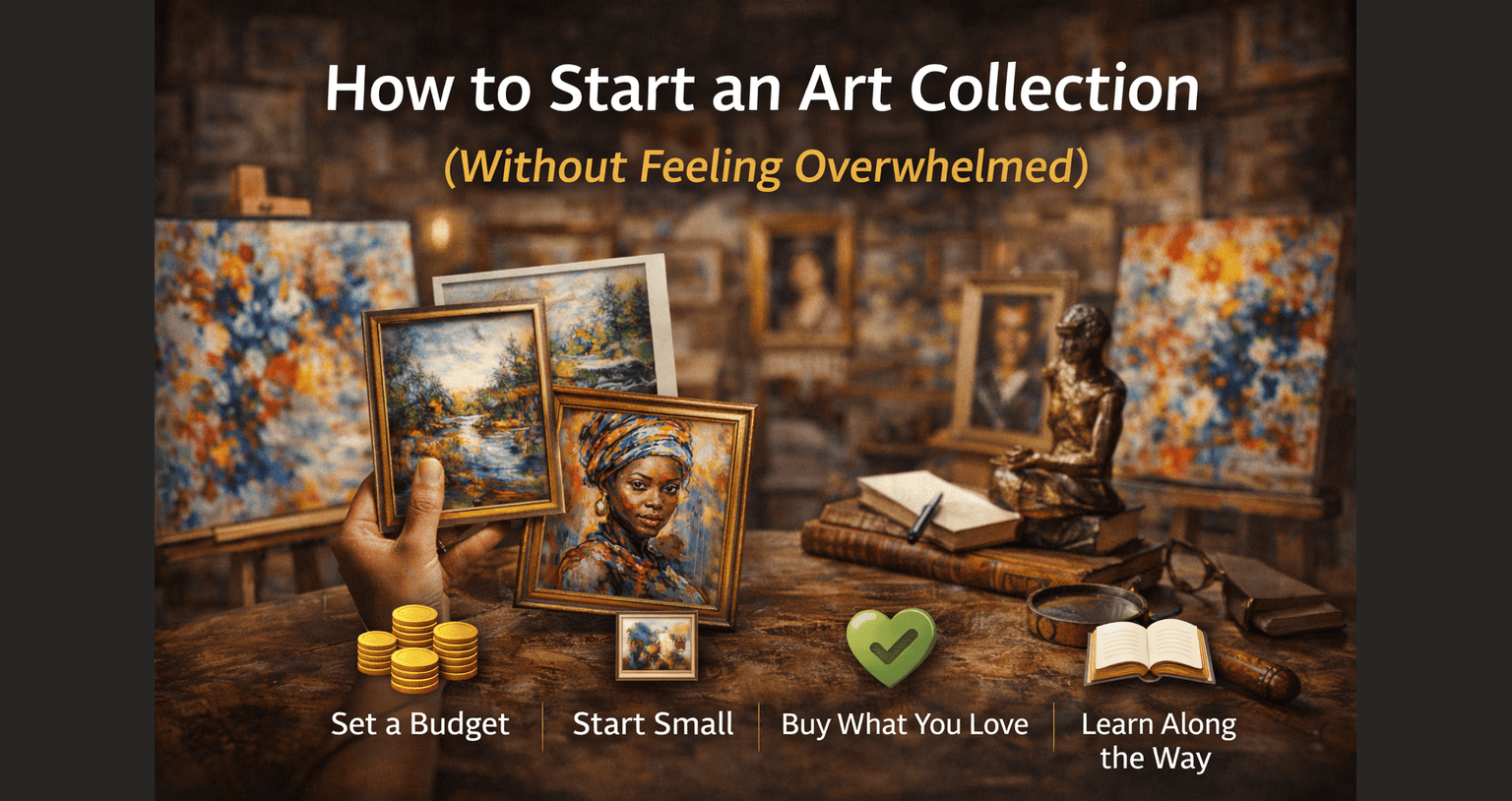
How to Start an Art Collection (Without Feeling Overwhelmed)
Starting an art collection sounds like something only wealthy collectors do, doesn’t it?
Big houses. White walls. Quiet galleries. Price tags that make you swallow hard.
But here’s the truth most people don’t realize: almost every art collector started with just one piece. Not ten. Not fifty. One.
And that first piece usually wasn’t perfect or expensive. It was simply something they liked.
If you’ve ever thought about starting your own collection, even casually, you’re already closer than you think.
Let’s talk about how to begin, step by step, in a way that feels natural and realistic.
Step 1: Forget the Idea That You Need to Be an Expert
This is the biggest mental block for beginners.
People think they need to understand art history, movements, and techniques before buying anything. You don’t.
You just need curiosity and a bit of attention.
Art collecting isn’t about impressing anyone. It’s about living with things that inspire you, calm you, or simply make your space feel more like you.
That’s enough reason to start.
Step 2: Start with What You Like, Not What Others Recommend
This sounds obvious, but it’s surprisingly easy to ignore.
Sometimes people buy art because:
- It’s trendy
- Someone said it’s valuable
- It matches what they think a collector should own
But here’s the thing: you’re the one who has to look at it every day.
So ask yourself a simple question:
Would I still enjoy this piece if nobody else ever saw it?
If the answer is yes, you’re on the right track.
Step 3: Set a Comfortable Budget
You don’t need a huge budget to start collecting art.
Many first-time collectors begin with a range they’re comfortable with, something that feels like an investment but not a financial stretch.
A good mindset is this:
Think of your first purchase as both decoration and experience. You’re learning what you like, how buying works, and what draws you in.
That knowledge is part of the value.
Step 4: Explore Before You Buy
This part is fun.
Spend time:
- Browsing gallery websites
- Visiting exhibitions
- Following artists online
- Looking at different styles
You’ll start noticing patterns in what you like. Certain colors. Certain moods. Certain subjects.
At first, everything feels random. Then suddenly, your taste begins to take shape.
That’s when collecting gets interesting.
Step 5: Learn a Little About the Artist
You don’t need to write a research paper. Just get a sense of who created the work.
Ask simple questions:
- How long have they been painting?
- Do they have a consistent style?
- Are they growing and improving?
Many collectors enjoy this part the most. Art becomes more meaningful when you know the story behind it.
Step 6: Don’t Wait for the “Perfect” Piece
This is a trap many beginners fall into.
They keep waiting. Browsing. Comparing. Hesitating.
Weeks pass. Months pass.
Meanwhile, someone else buys the piece they secretly loved.
Your first artwork doesn’t need to be perfect. It just needs to feel right.
Collections grow naturally over time. Nobody builds one in a day.
Step 7: Keep Records of Your Purchases
This might sound boring, but it’s important.
Whenever you buy original art, keep:
- Receipts
- Certificates of authenticity
- Artist information
If you ever decide to sell or insure your artwork, this documentation matters.
Think of it like keeping the box for something valuable. Small effort, big benefit later.
Step 8: Think Long Term, But Don’t Overthink Value
Yes, some art increases in value. That’s real.
But not every piece will become an investment, and that’s okay.
If you focus only on future resale value, collecting becomes stressful. If you focus on enjoyment and discovery, it becomes rewarding.
And interestingly, many of the best investments were pieces people bought simply because they loved them.
Step 9: Display and Enjoy Your Collection
This might be the most important step of all.
Hang your art. Live with it. Let it shape your space.
Art shouldn’t stay hidden in storage or wrapped in plastic. Its purpose is to be seen, felt, and experienced.
There’s something quietly satisfying about walking past a piece you chose yourself and thinking, I’m glad I bought that.
A Question Beginners Often Ask
How many pieces make a collection?
Here’s the honest answer: more than one.
That’s it.
Two pieces are a collection. Three pieces are a collection. You don’t need a gallery wall to call yourself a collector.
If you’ve bought art thoughtfully, you’ve already started.
Common Mistakes to Avoid
Let’s keep this simple.
Avoid:
- Buying art just because it’s cheap
- Rushing into purchases
- Ignoring what you genuinely like
- Waiting forever for the “perfect” moment
Collecting should feel enjoyable, not stressful.
Where to Find Art as a Beginner
If you’re wondering where to look, start with:
- Local galleries
- Online galleries and marketplaces
- Art fairs and exhibitions
- Emerging artists on social media
Some of the most interesting collections begin with artists who aren’t famous yet.
And discovering talent early is part of the excitement.
Starting an art collection isn’t about money, status, or expertise.
It’s about paying attention to what moves you.
One piece becomes two. Two become five. And before you realize it, your walls begin telling a story—your story.
And honestly, that’s what collecting is really about.
Not owning art.
Living with it.
