
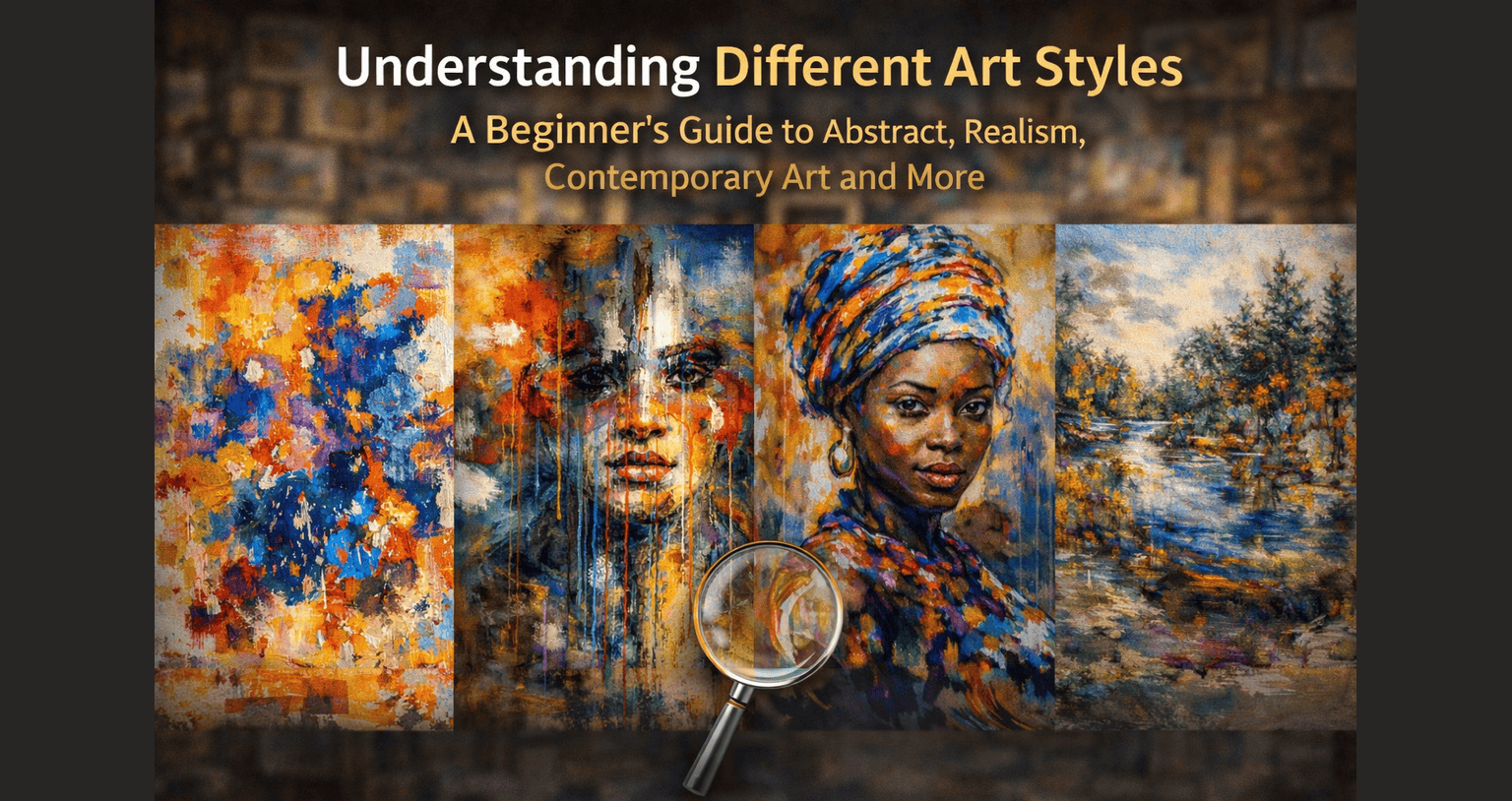
Understanding Different Art Styles: A Beginner’s Guide to Abstract, Realism, Contemporary Art and More…
Have you ever looked at a painting and thought, “I like this… but I have no idea what style it is”?
You’re not alone.
A lot of people enjoy art but feel a bit lost when terms like abstract, realism, or contemporary come up. Galleries use these words all the time, and if you’re new to buying art, it can feel like everyone else understands something you don’t.
Here’s the good news: understanding art styles isn’t complicated. Once you know what to look for, it becomes surprisingly easy, and actually fun.
Let’s walk through some of the most common art styles you’ll see, especially if you’re thinking about buying art for your home or office.
Why Art Styles Matter When Buying Art
Before we jump into the styles, here’s something worth knowing.
Art style isn’t just an art-school term. It affects:
- How a painting feels in your space
- Whether it matches your interior
- How timeless it looks
- Sometimes even its value
So understanding styles helps you buy with confidence instead of guessing.
1. Realism: Art That Looks Like Real Life
Realism is probably the easiest style to recognize.
If a painting looks very close to a photograph, accurate faces, natural colors, detailed textures—you’re likely looking at realism.
Portraits often fall into this category. So do landscapes and still-life paintings that look almost lifelike.
Why buyers love realism:
- It’s familiar and easy to connect with
- It works well in homes and offices
- It often carries strong emotional impact
If you like artwork where you instantly recognize the subject, realism is a safe and satisfying choice.
2. Abstract Art: Feeling Over Detail
Abstract art is different. Instead of showing reality exactly as it is, abstract art focuses on:
- Colors
- Shapes
- Texture
- Emotion
Sometimes there’s no obvious subject at all, and that’s the point.
At first, people sometimes say, “I don’t understand abstract art.”
But here’s a better way to approach it: you don’t have to understand it logically. You just have to feel something when you look at it.
Why buyers choose abstract art:
- It fits modern interiors beautifully
- It adds energy and color to a space
- It sparks conversation
Abstract art is less about “what is it?” and more about “how does it make me feel?”
3. Contemporary Art: Art of Our Time
This one confuses many people, so let’s simplify it.
Contemporary art basically means art being created now, in the present day.
It isn’t a single style. Contemporary works can be:
- Abstract
- Realistic
- Experimental
- Mixed media
What makes contemporary art unique is the ideas behind it. Many contemporary artists explore themes like:
- Identity
- Society
- Technology
- Culture
Why collectors are drawn to contemporary art:
- It feels current and relevant
- It often grows in value as artists gain recognition
- It reflects modern life
If you want artwork that feels fresh and forward-looking, contemporary art is worth exploring.
4. Impressionism: Capturing Light and Moments
Impressionist-style paintings often feel soft and atmospheric.
Instead of sharp detail, you’ll notice:
- Visible brush strokes
- Gentle blending
- Focus on light and mood
Landscapes and outdoor scenes are common in this style.
Why people love it:
- It feels calming
- It creates a relaxed atmosphere
- It works beautifully in living rooms and bedrooms
Impressionist works often feel peaceful, almost like a memory rather than a photograph.
5. Expressionism: Emotion First
Expressionist art takes emotion and turns the volume up.
You might see:
- Bold colors
- Distorted shapes
- Dramatic faces
- Intense energy
The goal isn’t accuracy, it’s emotion.
Some pieces feel joyful. Others feel raw or powerful. Either way, they make an impression.
This style is great if you want art that feels bold and expressive rather than quiet and decorative.
6. Minimalism: Less, But Stronger
Minimalist art is exactly what it sounds like, simple, clean, and uncluttered.
You may see:
- Few colors
- Simple lines
- Lots of space
And yet, somehow, it still works.
Minimalist art is popular in:
- Modern apartments
- Offices
- Contemporary homes
It adds elegance without overwhelming a space.
How to Choose the Right Art Style for Your Space
Now comes the practical question.
How do you decide what style to buy?
Here’s a simple way to think about it.
Look at your space
Modern interiors often pair well with abstract or minimalist art.
Traditional interiors often suit realism or impressionist styles.
Notice your reaction
Which artworks make you stop scrolling?
Which ones do you keep looking at longer?
That instinct matters more than you think.
Start with one piece
You don’t need to figure everything out at once. One painting is enough to begin.
A Mistake Many First-Time Buyers Make
Some people try to buy art based on what they think they should like instead of what they actually like.
That rarely works.
Art is personal. The best collections aren’t built by following rules—they’re built by following taste.
If a piece speaks to you, that’s a good sign.
Do Art Styles Affect Price?
Sometimes, yes, but not always.
Price depends more on:
- The artist
- The size
- The medium
- Demand
You can find affordable abstract art and expensive abstract art. The same goes for realism or contemporary works.
Style influences taste more than price.
Understanding art styles doesn’t mean becoming an expert overnight.
It just means learning to notice:
- What you’re drawn to
- What fits your space
- What feels right
And honestly, that last one matters most.
Because at the end of the day, the best artwork isn’t always the most famous or the most expensive.
It’s the one you still love every time you walk past it.
